


Content of the Montessori Orientation Course for Ages 6-12
Program Objectives
Intellectual Development
- Provide opportunities for children to deeply understand concepts through practical experiences, independent research, and interdisciplinary learning.
- Encourage children to ask questions and seek answers through research projects.
Social Skill Development
- Teach children how to work in groups, solve problems, and collaborate with peers.
- Foster empathy, respect, and a sense of responsibility.
Promoting Independence
- Encourage children to manage their time, learning materials, and personal goals independently.
- Strengthen self-discipline and self-confidence.
Connecting with the World
- Help children explore the relationships between humans, nature, and society through various academic disciplines.
Course Content
Language
- Develop reading, writing, and communication skills.
- Analyze grammar and syntax through hands-on activities.
- Explore literature, poetry, and the art of expressive language.
Mathematics
- Study concepts ranging from basic to advanced, such as arithmetic, geometry, and algebra.
- Use Montessori materials like bead chains, number boards, and geometric solids to facilitate learning.
- Enhance logical thinking and problem-solving abilities.
Culture
- Geography: Study physical and human geography.
- History: Learn about timelines, human evolution, and ancient civilizations.
- Science: Explore biology, physics, chemistry, and earth sciences.
- Art and Music: Develop creativity through drawing, sculpting, and music.
Sensorial Activities and Practical Life
- Practice real-life skills such as cooking, gardening, and environmental stewardship.
- Strengthen fine motor skills, organization, and management abilities.
This course provides a comprehensive introduction to Montessori principles and practices for the 6-12 age group, empowering educators to guide children in this critical stage of development. By nurturing intellectual curiosity, social harmony, and independence, the course equips participants to create meaningful connections between children and the world around them.
Sincerely,
Montessori Vietnam Education.

Others

PROGRAM OVERVIEW AMI INTERNATIONAL MONTESSORI TEACHER TRAINING COURSE (6-12 Years Old)
Dear Interested Applicants,

REGISTRATION LINK FOR THE AMI INTERNATIONAL MONTESSORI TEACHER TRAINING COURSE (6-12 YEARS OLD)
Dear interested trainees,

Registration Link for the AMI International Montessori Orientation Diploma Course (6-12 Years)
Dear Parents, Educators, and Individuals Dedicated to Child Development.
Registration Link for the AMI International Montessori Teacher Training Course (6-12 Years)
Dear Parents, Educators, and Individuals Dedicated to Child Development.

Lastest posts
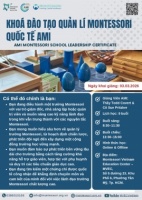
INTERNATIONAL AMI MONTESSORI MANAGEMENT COURSE – FIRST TIME IN VIETNAM
Montessori Vietnam Education Center (MVEC) is proud to announce the opening of enrollment for the International AMI Montessori Management Training Course, marking a significant milestone as this AMI-standard management program is being held in Vietnam for the...

Q&A WITH THE SPEAKERS | A Sharing About Children: The Adult Environment – The Foundational Ground in the First Three Years of Life
When parents are busy with work, living far from extended family, or when multigenerational households hold different views… how can we prepare a truly harmonious adult environment for children aged 0–3?”
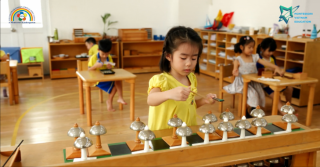
Q&A CORNER WITH THE SPEAKERS | THE MONTESSORI 3–6 ENVIRONMENT: WHERE CHILDREN “GROW BY BECOMING THEMSELVES”
“When children transition from a 0–3 environment to a 3–6 environment, what are the key differences in the physical setting?”
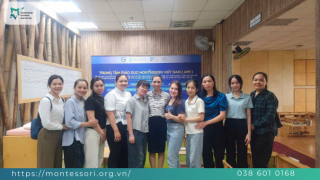
WELCOME TO THE TEACHERS' DELEGATION FROM SAKURA MONTESSORI CASA FOR A VISIT AND EXCHANGE OF EXPERIENCE WITH MVEC
Montessori Vietnam was delighted to welcome the teachers from Sakura Montessori Casa (Address: 42/9 Dang Duc Thuat Street, Ward 6, Tam Hiep Commune, Bien Hoa City) on their meaningful recent visit and exchange.
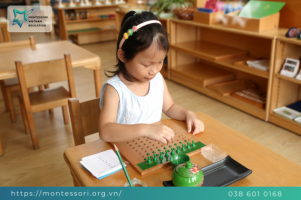
Q&A CORNER WITH THE SPEAKERS | WHEN CHILDREN “DO THINGS DIFFERENTLY” FROM ADULT INSTRUCTIONS
“My 21-month-old is working with a number puzzle board. The child can only fit the pieces when the board is turned upside down; when I turn it the ‘right’ way, the child refuses. How should we respond in this situation?”
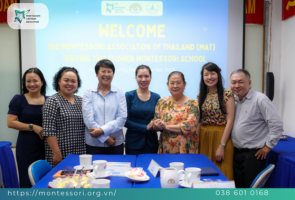
MONTESSORI NETWORKING REGION – PROFESSIONAL DIALOGUE FOR EARLY CHILDHOOD EDUCATION
On the morning of December 11, 2025, Montessori Vietnam Education Center (MVEC), in collaboration with Tiny Flower Montessori School (TFM), had the honor of welcoming and organizing a professional exchange meeting with a delegation from the Montessori...

GREEN GARDEN MONTESSORI
At Green Garden Montessori, safety and quality care and education are always our top priorities. The school continuously strives to improve the learning environment and build a team of dedicated and highly qualified teachers, aiming to provide children with a...
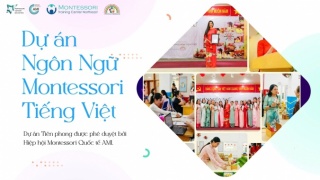
THE JOURNEY OF BRINGING VIETNAMESE MONTESSORI LANGUAGE MATERIALS TO THE INTERNATIONAL STAGE.
The Vietnamese Montessori Language Materials Project — a pioneering initiative approved by the Association Montessori Internationale (AMI). This marks an important milestone in standardizing the mother tongue in alignment with the excellence of global...

Montessori Consulting Experts – Advancing the Development of Schools, Classrooms, and Families
The Montessori Consulting Program of Montessori Vietnam Education Center brings together internationally accredited experts with deep insight into the Vietnamese educational context, providing flexible solutions to enhance school operations and foster a...